
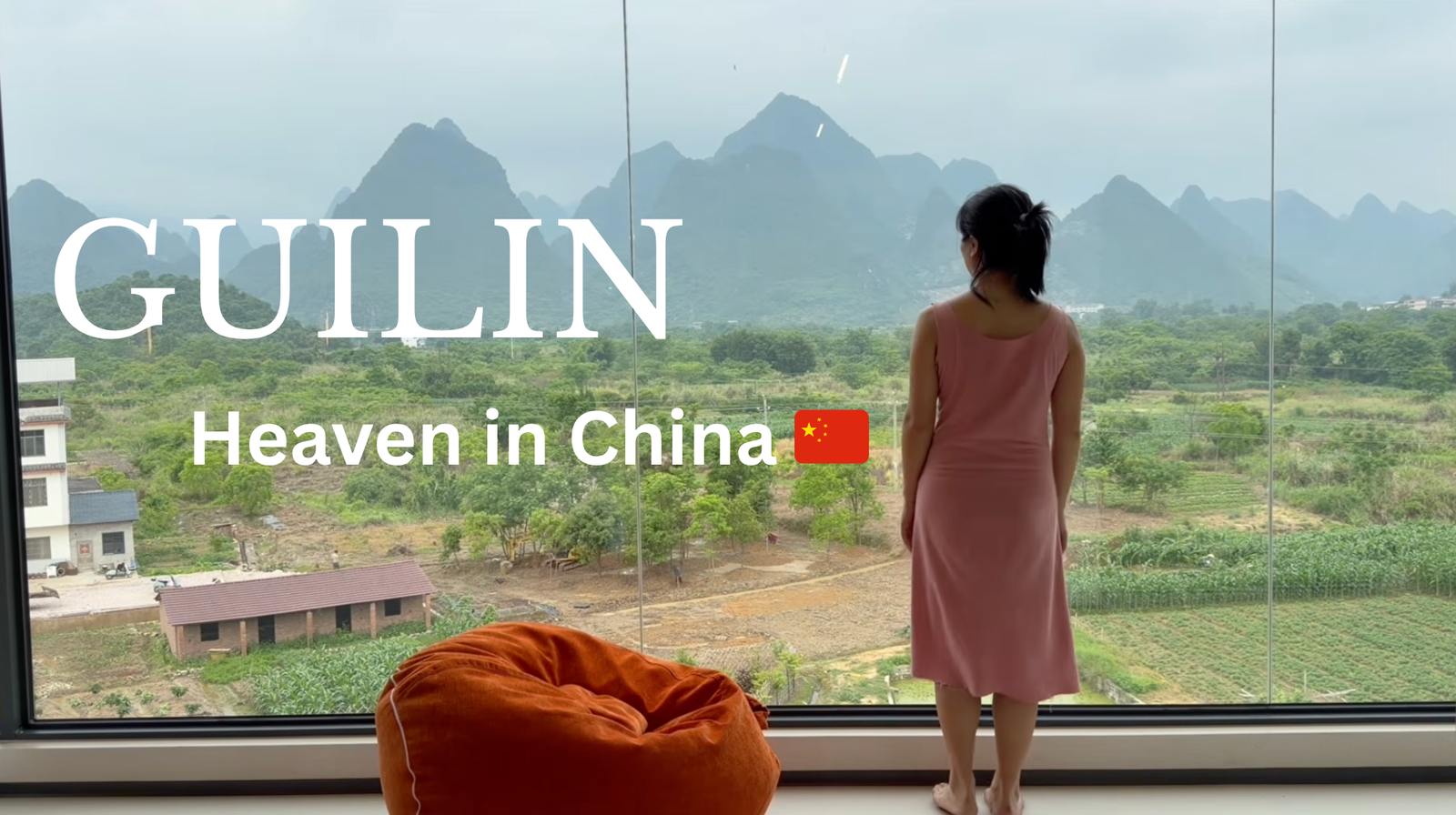
Table of Contents
Sometimes the best trips are the unplanned ones…
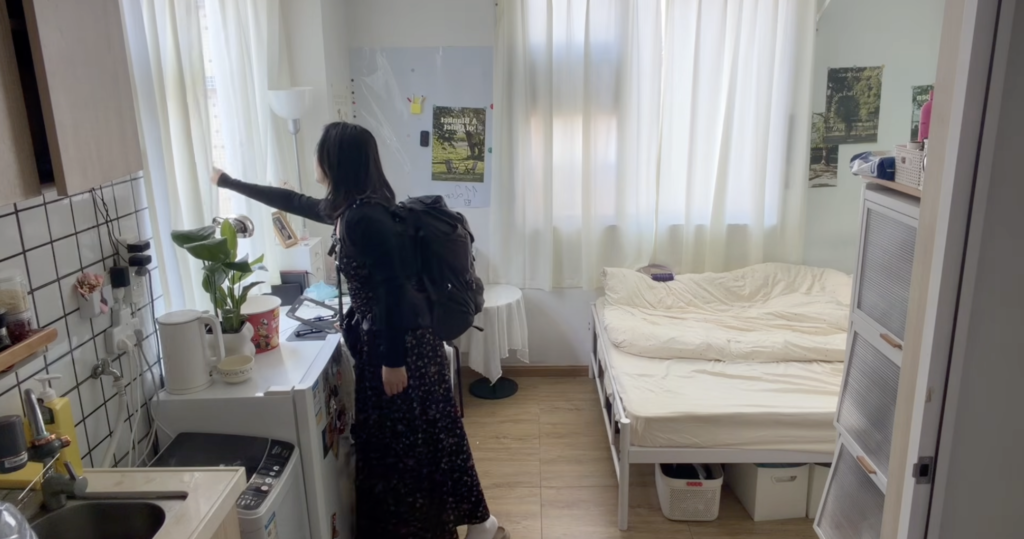
A few days ago, I suddenly decided to leave Shenzhen for a short break. Lately, life had mostly been work, editing videos late at night, sleeping too little, and spending too many hours in front of screens. My body was starting to feel tired in a way coffee couldn’t fix anymore.
So I packed a backpack, brought way too many dresses, and booked a train ticket to Guilin.
Honestly, I didn’t even fully plan the trip.
But maybe that made it feel more exciting.
Why Guilin and Yangshuo Are So Famous
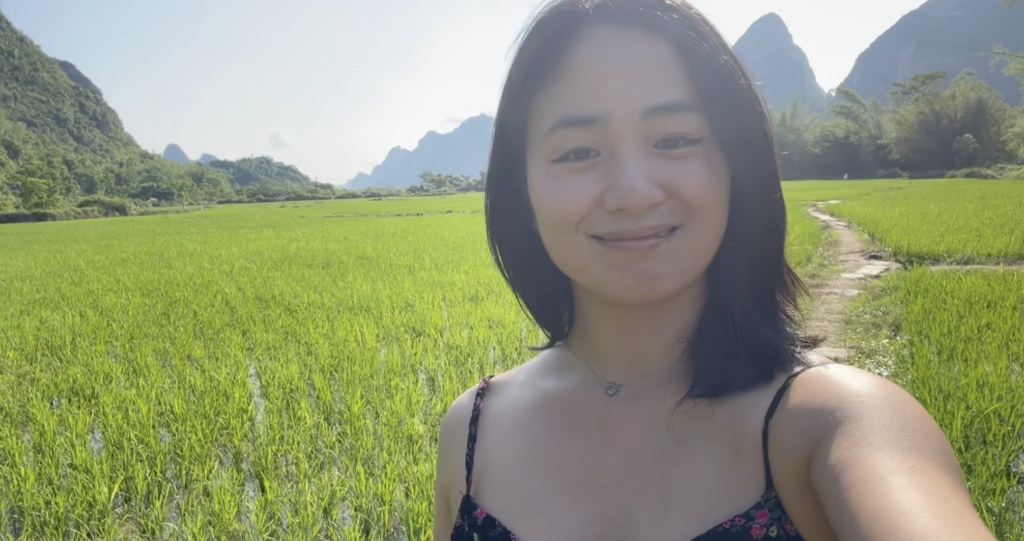
If you’ve ever searched for beautiful landscapes in China, you’ve probably seen photos of Guilin and Yangshuo without even realizing it.
The region is famous for its karst mountains — those sharp, dramatic green peaks that almost look unreal. The scenery here has inspired traditional Chinese paintings and poems for centuries.
There’s even a famous Chinese saying:
“Guilin’s scenery is the best under heaven.”
After visiting, I kind of understand why people say that.
Unlike big modern cities, Guangxi feels slower, quieter, and much more connected to nature.
Taking the High-Speed Train From Shenzhen

One thing I love about traveling in China is how convenient the high-speed trains are.
The train from Shenzhen to Guilin/Yangshuo takes only around 3 hours($30), which is much faster than older slow trains. The stations can feel chaotic during rush hour, especially in Shenzhen, but the trains themselves are comfortable and clean.
About the subway in Shenzhen, there’s even a business-class section on some metro lines in Shenzhen now, which feels much quieter if you don’t mind paying more.
Travel Tip:
- Arrive early at the station because security checks can take time
- Bring your passport if you’re a foreign traveler
- You can order food directly to your train seat through Chinese railway apps
- Morning trains usually have better mountain views
And yes… I still double-check my passport every trip because I once forgot it before traveling.
Bamboo Rafting in Yangshuo
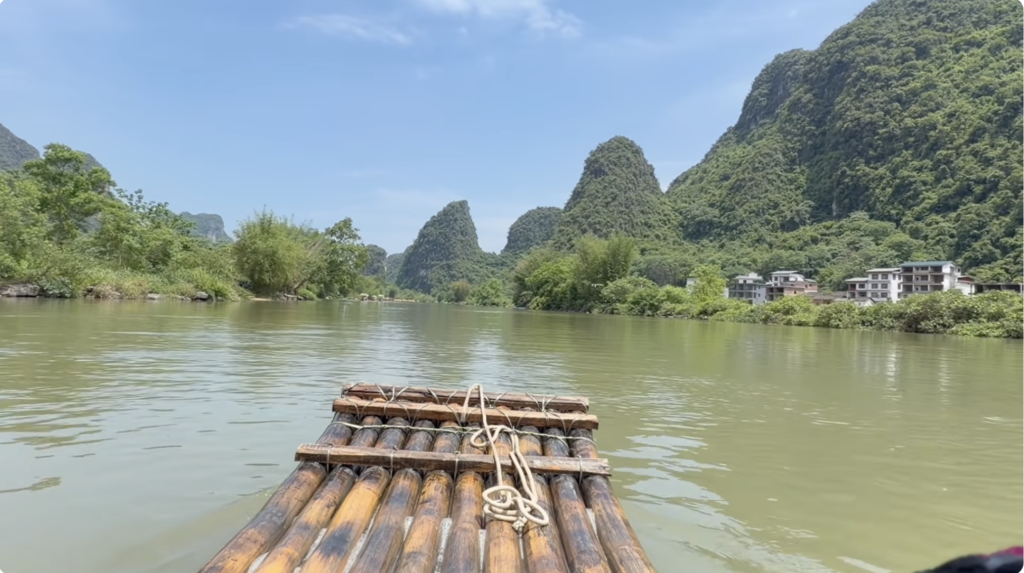
One of the most popular things to do in Yangshuo is bamboo rafting along the Yulong River.
I bought a waterproof phone pouch before going because I wanted videos without worrying about my phone falling into the water.
Also… I can’t swim.
So maybe I was slightly nervous the entire time.
But once the raft started moving, everything suddenly felt peaceful.
No notifications.
No crowded subway stations.
No rushing.
Just mountains, water, and the sound of nature.
The weather was surprisingly clear too, which made me lucky because May is usually part of Guangxi’s rainy season.
Bamboo Rafting Tips:
- Go early morning or late afternoon for softer lighting
- Waterproof your phone and camera
- Wear comfortable sandals because the area gets wet
- Some rafting routes are calmer than others, so ask before booking
- If you’re scared of water like me… maybe don’t lean too far over the edge
The Difference Between Shenzhen and Guangxi
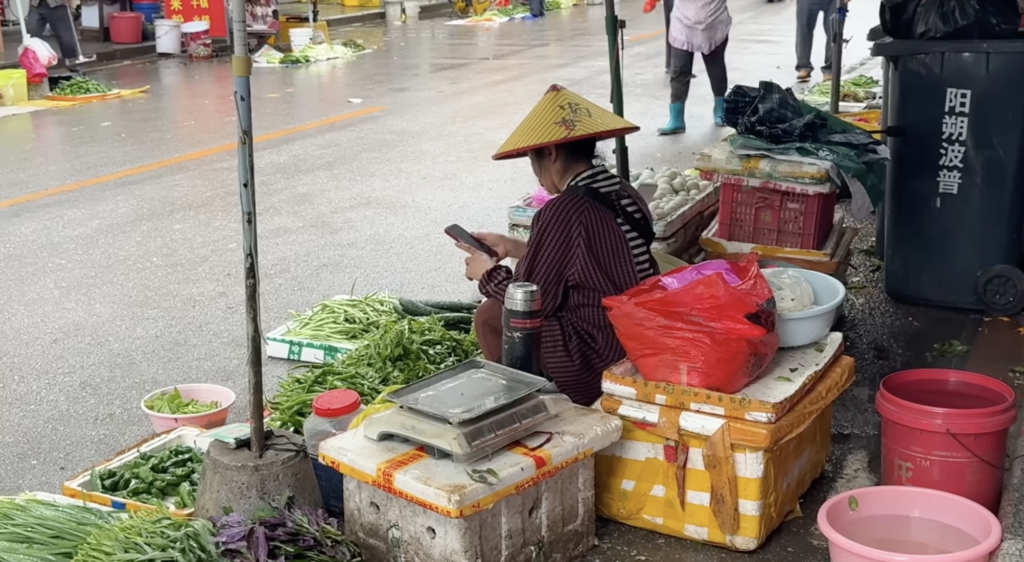
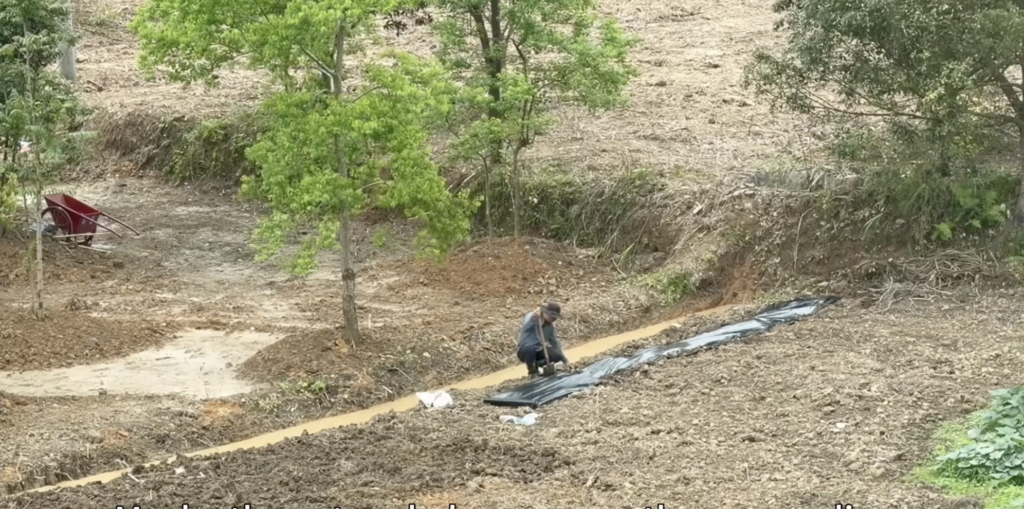
The biggest thing I noticed during this trip was how different the atmosphere feels compared to Shenzhen.
Shenzhen feels futuristic, efficient, and extremely fast-paced.
Guangxi feels human.
People sit outside talking. Small streets stay lively at night. There are handmade crafts, local snacks, singers near bridges, and tiny shops everywhere.
A lot of the local culture comes from the Zhuang people ethnic minority communities, which gives the region a very unique identity compared to other parts of China.
Even the food felt different.
Food in Guangxi: Spicy, Sour, and Surprisingly Addictive
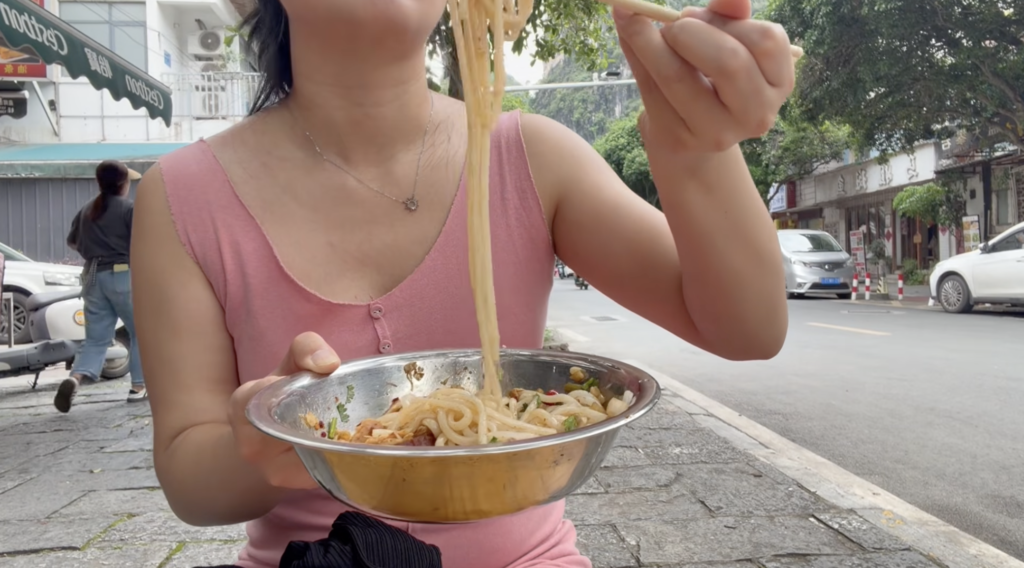
One thing about Guangxi…
People REALLY love noodles.
I felt like I ate rice noodles almost every day during this trip.
One local specialty is luosifen — spicy river snail rice noodles famous for their strong smell. People usually either love it or hate it.
I ended one night eating fried luosifen, and honestly, the flavor becomes weirdly addictive after a few bites.
I also tried fruit salad with chili powder on top, which looked terrifying at first but actually tasted refreshing.
And of course, I ate durian because it was cheaper there than in Shenzhen.
Food Tips:
- Don’t judge luosifen by the smell alone ($2.5)
- Guangxi food is often spicy and sour together
- Small local restaurants usually taste better than tourist restaurants
- Passion fruit drinks are everywhere and perfect during hot weather
Hotel Lesson: Spend More for Better Sleep
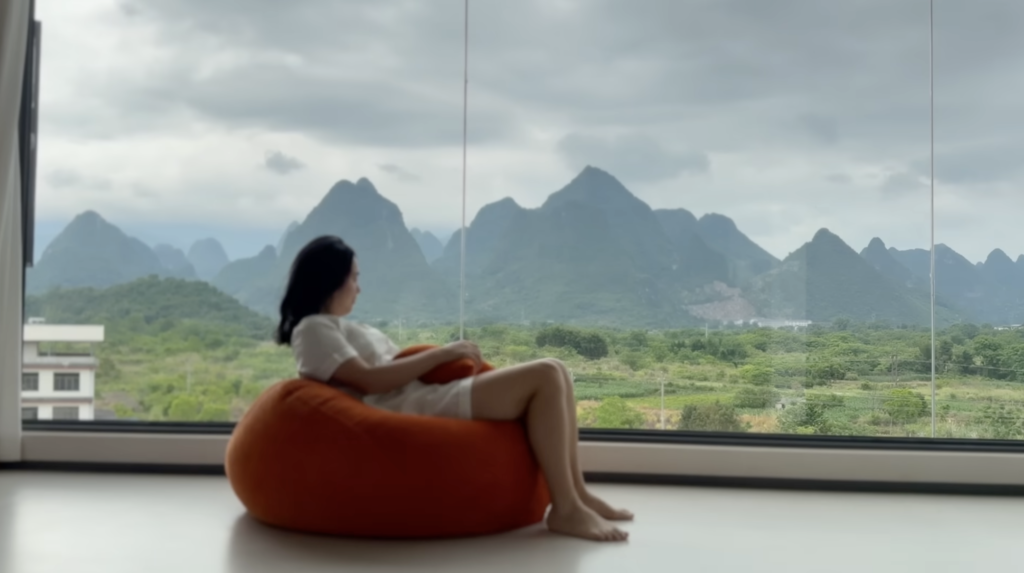
This trip reminded me how important sleep is while traveling.
My first hotel looked decent online, but there were mosquitoes, construction noise, and terrible sleep quality. The next morning I felt exhausted and honestly a little miserable.
So I upgraded to another hotel that cost only slightly more — around $14 extra(in the picture above).
The difference was unbelievable.
The balcony overlooked mountains on both sides, there was a bathtub with disposable covers, and the room finally felt peaceful.
I kept opening the balcony door over and over because the view didn’t even feel real.
Hotel Tip:
In scenic places like Yangshuo, paying slightly more for a mountain-view hotel is usually worth it.
The experience becomes part of the trip itself.
Trying Traditional Ethnic Minority Clothing

While exploring nearby areas, I noticed tourists taking photos in Hanfu, traditional Chinese clothing that always looks beautiful against mountain scenery.
But instead, I decided to try ethnic minority clothing from the local region.
The details were incredible — silver accessories, embroidered fabrics, and elaborate headpieces that are much heavier than they look.
At first, the photographer wanted to include birds as props, but I felt bad for them and asked not to use them.
The photos turned out much more natural afterward anyway.
Longji Rice Terraces: One of the Most Beautiful Places I’ve Seen
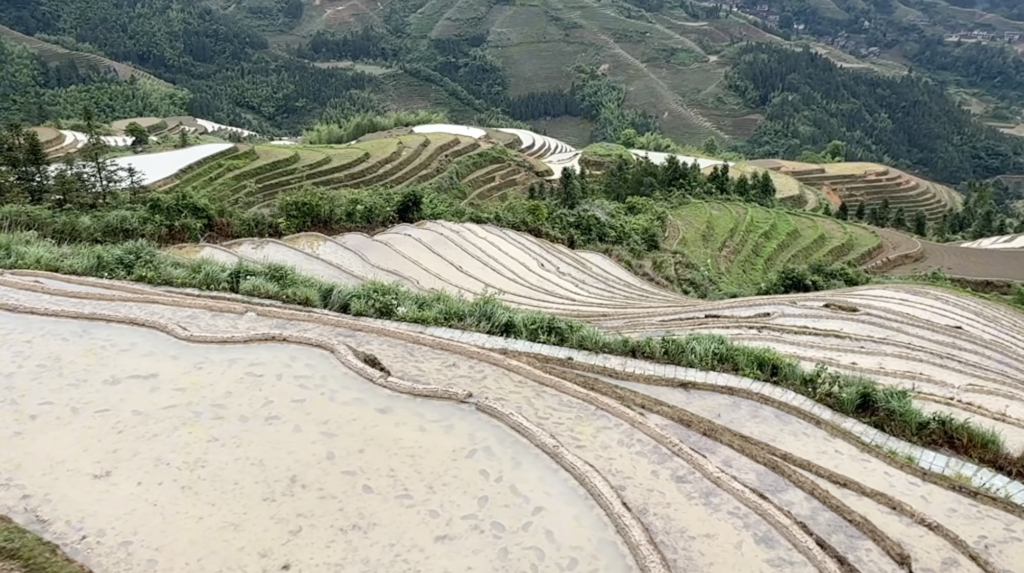
Later, I traveled to Longji Rice Terraces, which took around four hours because the area is very remote.
But the moment I arrived, I forgot how tired I was.
The rice terraces looked endless, layered across the mountains like giant green waves.
Longji is also known for its traditional wooden houses and ethnic minority villages. Everything feels quiet there in a way that’s difficult to describe unless you experience it yourself.
At one point, I met an 80-year-old grandmother who invited me into her home and showed me handmade crafts she had spent nearly a month creating.
Moments like that are honestly why I love traveling.
Not luxury hotels.
Not social media photos.
Just real human moments.
Why I Still Travel With Only a Backpack
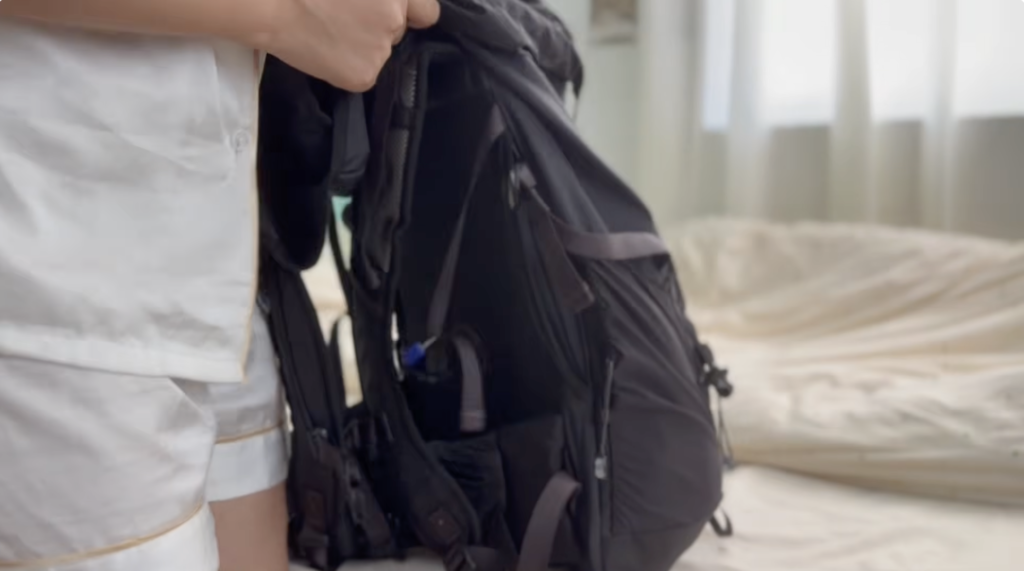
Even though I travel often, I still prefer carrying only a backpack.
Comfort and convenience matter more to me than bringing too many things.
But this time was different.
I realized I packed more dresses than usual, maybe because I finally felt genuinely excited to travel again after almost six months without a proper trip.
I even packed a swimsuit… just in case the hotel had a pool.
(It didn’t.)
Final Thoughts
Every time I travel, I come back physically tired but mentally refreshed.
Maybe that’s the strange thing about traveling.
You spend money, lose sleep, walk too much, carry heavy bags, and somehow still return feeling better than before.
Leaving the city for a while reminded me that life doesn’t always need to move at Shenzhen speed.
Sometimes sitting quietly by mountains and rivers is enough.
And honestly?
I think I needed that more than I realized.
If you want to see the full experience, you can watch my full video below. I really hope this video gives you a bit of peace. Or even just a softer feeling in the middle of a stressful day. And maybe it reminds you that rest isn’t something you have to “earn”—it’s something you’re allowed to take.
For me, this trip was exactly that: slowing down, reconnecting, and just being present again in a place that feels completely different from the rush of daily life.
So I hope you enjoy the rest of the video. Maybe it brings you a little motivation, or simply a moment of calm. And if nothing else—just a reminder that it’s okay to step out for a while, even if it’s just somewhere close to home.
Thank you Ting this will be a great experience. I will be planning my trip to China in November, for business and pleasure. It would be useful to discuss my plans with you for guidance.
Many thanks.
You are always welcome Vili, I am happy my videos can be helpful 😊
DEAR MADAM TING!
YOUR EXOTIC TRIP WHAT THRILL ME UP, YOUR EFFORT IN NEVER UNNOTICED! MADAM.
IN THIS YEAR OF 2026, I INTRODUCE THE CHINESE GOVERNMENT SCHOLARSHIP CSC TO WESTERN STUDENTS STUDY IN CHINA, THEY ARE VERY INTERESTED IN TRAVELING TO CHINA! I GUIDE THEIR PARENTS TO CHINESE CULTURE AND FOLKS AND HOW TO INTEGRATE IN SOCIAL LIFE! THEY LOVE CHINA AND FEEL ATONISHING! I PLAN ON TRAVELING TO ZHEJIANG AND BEIJING WITH A GROUP OF BUSINESS FAMILIES TO ENJOY OUR SUMMER VACATION! SEE YOU THERE! I SHARE MY CLIENTS YOUR CHANNELS WHICH ARE PRODUCTIVE FOR US! TKS LADY TING.
Thank you for your channel. Very refreshing to see and hear a young person relating to life as you do. Wishing you the best in your journey from South Carolina, USA!